
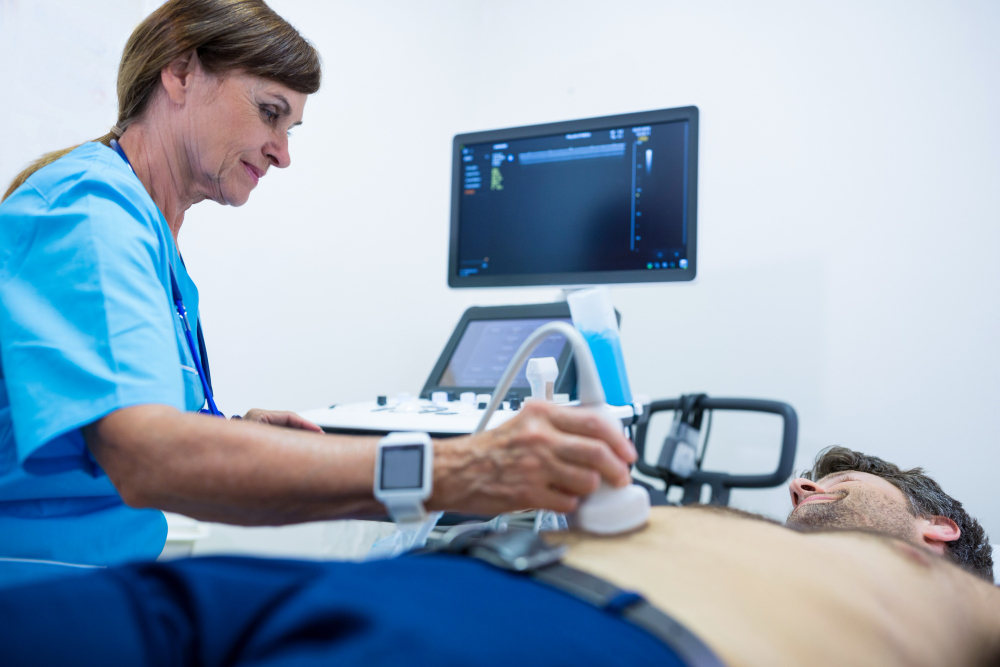
An ultrasound KUB is a safe and simple scan that looks at your kidneys, ureters, and bladder. Doctors often use this test in fetal medicine and fetal radiology to check for problems in the urinary system. Sometimes, it is called a kidney ultrasound or bladder ultrasound. Many people also hear it called a KUB scan procedure. This scan helps doctors find the cause of pain, infections, or other issues in the lower belly.
What is an Ultrasound KUB?
First, let’s break down the name. KUB stands for Kidneys, Ureters, and Bladder. An ultrasound KUB uses sound waves to make pictures of these organs. Because it does not use radiation, it is very safe. Doctors use this scan to check for stones, swelling, or other problems in the urinary tract. Sometimes, it is also called a bladder scan or urinary tract imaging.
Why is an Ultrasound KUB Performed?
Doctors may suggest an ultrasound KUB for several reasons. For example, it helps find the cause of:
In fetal medicine, this scan checks the baby’s kidneys and bladder during pregnancy. Because it is non-invasive, it is safe for both mother and baby.
How to Prepare for an Ultrasound KUB
Preparing for an ultrasound KUB is easy. Still, following your doctor’s advice is important. Here are some common steps:
Sometimes, your doctor may give special instructions. Always ask if you are unsure.
The Ultrasound KUB Procedure: Step-by-Step
Knowing what to expect can help you feel calm. Here is how the KUB scan procedure usually goes:
Most people feel no pain during the scan. However, you may feel some pressure if your bladder is very full.
What Do the Results Mean?
After the scan, a doctor will look at the images. The results can show:
Sometimes, the doctor may suggest more tests if the results are unclear. But often, the ultrasound KUB gives enough information to plan the next steps.
Safety and Risks of Ultrasound KUB
Ultrasound KUB is very safe. It does not use radiation, so there is no risk from X-rays. Because it is non-invasive, there is no pain or recovery time. According to the World Health Organization (WHO), ultrasound is safe for both adults and children. Even in pregnancy, it is widely used for fetal radiology.
However, sometimes the images may not be clear if you are very overweight or have a lot of gas in your belly. In these cases, your doctor may suggest another test.
Frequently Asked Questions (FAQs)
Conclusion
In summary, an ultrasound KUB is a safe and helpful test for checking your kidneys, ureters, and bladder. It helps doctors find the cause of many urinary problems. If your doctor suggests this scan, there is no need to worry. For personalized advice about ultrasound KUB, consult a qualified healthcare provider.